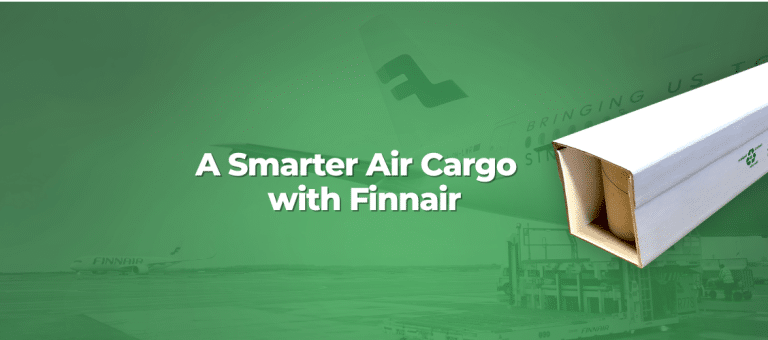


Eltete TPM has been shortlisted for the 2026 Air Cargo Environment Award for its AirCargoRunner solution, which helps air cargo operators optimize the use of PMC aircraft pallets while reducing operational weight and, where applicable, associated fuel use and CO₂ emissions.
Eltete TPM is one of seven finalists in the Air Cargo Environment category at the 2026 Air Cargo News Awards. The awards recognize companies in the air cargo industry that have taken steps to reduce environmental impact through initiatives focused on emissions and waste reduction.
The winners will be announced on 21 October 2026 at the Royal Lancaster London in the UK.

Optimizing more cargo on the same PMC
A key challenge in air cargo is making the most effective use of the available loading area while keeping operational weight as low as possible.
A PMC is a large aircraft pallet used to build up cargo loads for transportation by air. In conventional loading configurations, cargo can be restricted by the PMC’s locking system and by the space available within the pallet footprint.
AirCargoRunner can be used to build a lightweight platform above the PMC, raising the cargo above the locking system and allowing overhang where the load plan permits it.
This can increase the usable loading area of a PMC and enable more cargo to be loaded on the same aircraft pallet.
In one typical configuration, AirCargoRunner can enable up to eight Euro pallets to be loaded instead of five, with approximately 35% more loading area compared with the conventional configuration. The actual loading capacity depends on the cargo dimensions, weight, aircraft and applicable loading requirements.
This approach means that air cargo operators can look at efficiency from two directions at the same time:
- Use the available PMC loading area more effectively
- Reduce the weight of the materials used to build and support the load

Reducing operational weight in air cargo
AirCargoRunner is a fiber-based pallet runner developed for air cargo applications. It can replace heavier conventional materials, including wooden beams and other pallet runner structures, in suitable applications.
The AirCargoRunner weighs approximately 1 kg per metre and is designed to provide a lightweight structure for building and stabilizing cargo loads. Eltete reports that AirCargoRunners can be over 80% lighter than conventional wooden materials in comparable applications.
Reducing the weight of equipment used in air cargo operations can have an impact beyond easier handling. Every reduction in aircraft operating weight can potentially contribute to lower fuel consumption and associated emissions. The actual impact depends on factors such as aircraft type, route, flight conditions, load configuration and the amount of weight reduced.
For this reason, Eltete TPM focuses on measurable operational improvements rather than assuming that every application produces the same environmental result.
From loading efficiency to lower CO₂ emissions
The connection between load optimization and emissions is particularly relevant in air freight, where aircraft weight directly affects energy requirements.
AirCargoRunners are already in use with Finnair, where the solution has been applied to air cargo operations. In a specific long-haul flight scenario, Eltete estimates that a 100 kg reduction in operational weight can correspond to approximately 0.6 tonnes of CO₂ reduction per flight, based on a typical long-haul flight from Helsinki and route-specific emission factors.
This figure is a scenario-based estimate rather than a universal value. The emissions impact of using AirCargoRunner will vary according to the aircraft, route, operating conditions and actual weight reduction achieved.
That distinction is important: the environmental benefit comes from the operational weight reduction and load optimization achieved in a specific application, rather than simply from changing one packaging material to another.
A practical approach to air cargo efficiency
AirCargoRunner is designed to work with existing air cargo handling practices. The lighter material can make long runners easier to handle, while the system can also help distribute load and pressure across the PMC when the cargo net is tensioned.
Depending on the load configuration, AirCargoRunner can be used to:
- optimize the usable loading area of a PMC;
- enable cargo overhang above the PMC locking system where permitted;
- replace heavier wooden runners or similar structures;
- reduce the operational weight of the load-support structure;
- stabilize and distribute cargo loads;
- help reduce associated fuel use and CO₂ emissions where the weight reduction results in a measurable operational benefit.
The result is a different way of looking at air cargo equipment: not only as a support structure for the cargo, but as part of the overall load optimization strategy.
Recognition from the Air Cargo News Awards
The 2026 Air Cargo News Awards are now in their 42nd year and recognize achievements across the international air cargo industry. The Air Cargo Environment category specifically looks at initiatives that help reduce emissions or waste in the air cargo supply chain, including evidence of how these initiatives are measured and their impact on customers or partners.
Eltete TPM’s shortlist recognition reflects the growing importance of practical weight and load optimization solutions in air cargo.
For Eltete TPM, the AirCargoRunner is part of a broader approach to fiber-based transport packaging designed to improve logistics efficiency while reducing material and operational weight where appropriate.
The winner of the 2026 Air Cargo Environment Award will be announced in London on 21 October 2026.
Learn more about AirCargoRunner: https://www.aircargopackaging.com/