





The Finnish manufacturer has been recognised for a practical air cargo solution designed to reduce operational weight and improve the use of aircraft pallet loading space.
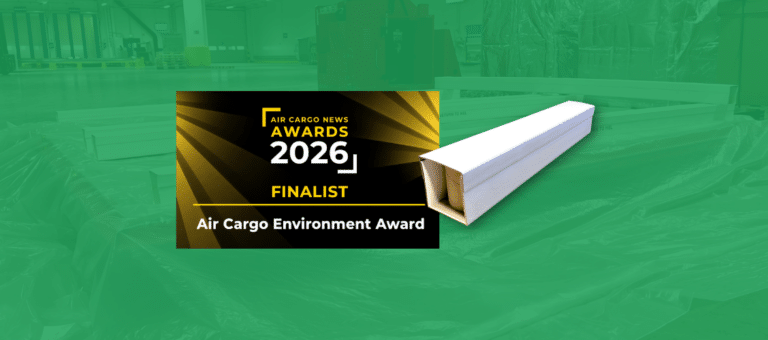
Eltete TPM has won the Air Cargo Environment Award 2026 at the Air Cargo News Awards in London for its AirCargoRunner solution.
The award recognises Eltete TPM’s work to address an often-overlooked aspect of air cargo efficiency: the weight and design of the materials used to support cargo loads.
The award was decided by an independent jury of experienced professionals from across the air cargo industry. Their recognition highlights the importance of looking beyond the most visible innovations and considering how practical improvements to cargo equipment, packaging and loading methods can also contribute to more efficient operations and reduced environmental impact.
As the industry works to reduce aviation emissions through measures such as sustainable aviation fuel (SAF), technology and operational improvements, there are also opportunities to examine the physical materials used throughout cargo operations.
AirCargoRunner is a lightweight, fiber-based runner that can replace conventional wooden support beams in suitable air cargo loading configurations. It raises cargo above the PMC pallet’s locking system, allowing operators to make better use of available loading space where the load plan permits.
In a suitable configuration, AirCargoRunner can enable up to eight Euro pallets to be loaded on a PMC instead of five, providing approximately 35% more loading area than the conventional configuration.

Real-world application with Finnair Cargo
AirCargoRunner is in use with Finnair Cargo, helping demonstrate how changes to cargo-support materials can contribute to operational improvements.
According to Eltete TPM’s Finnair case study, using six AirCargoRunners on one PMC can reduce operational weight by approximately 100 kg compared with the conventional configuration. Based on a typical 14-hour long-haul flight from Helsinki, Eltete estimates that this weight reduction could correspond to around 0.6 tonnes of CO₂ and 35 kg of fuel saved per flight.
At one such flight per day, the estimated annual impact would be approximately 219 tonnes of CO₂ and 12.8 tonnes of fuel. These figures are scenario-based estimates; actual results depend on the route, aircraft, operating conditions and weight reduction achieved.
For Eltete TPM, the award is recognition of the potential for practical design improvements to contribute to more efficient air cargo operations.
“We are honoured to see the air cargo industry recognise that practical improvements to packaging materials can make a measurable difference. AirCargoRunner addresses an often-overlooked challenge: the weight and space taken up by conventional cargo support materials. Working with Finnair Cargo has helped us demonstrate the potential impact in real-world operations. This award encourages us to keep developing packaging solutions that help the industry improve efficiency and reduce its environmental impact“
– Nina Lökfors, EVP, Eltete TPM
Eltete TPM encourages airlines, ground handlers and cargo-loading teams to review their existing loading practices and assess where lightweight support materials and improved space utilisation could deliver operational benefits.
Learn more: AirCargoRunners in use with Finnair
We thank our partner Finnair Cargo for the trust and collaboration that have helped bring AirCargoRunner into real air cargo operations. We also thank Air Cargo News and the award jury for this recognition.
About Eltete TPM
Eltete TPM is a Finnish manufacturer of fiber-based pallets and transport packaging for industrial and logistics applications. Based in Loviisa, Finland, the company develops carton-based solutions designed to replace conventional materials such as wood and plastic, reduce packaging material use where possible, and support recycling through established carton recycling streams. Eltete TPM’s product development focuses on practical transport and packaging challenges, taking into account evolving packaging requirements, including the EU Packaging and Packaging Waste Regulation (PPWR).