





A New Collaboration for More Efficient Air Cargo
We are proud to see AirCargoRunners now in use with Finnair Cargo Finland’s airline, recognized for its commitment to operational excellence and reducing aviation emissions.
This implementation reflects a shared focus on improving air cargo efficiency—delivering measurable cost savings while lowering environmental impact.
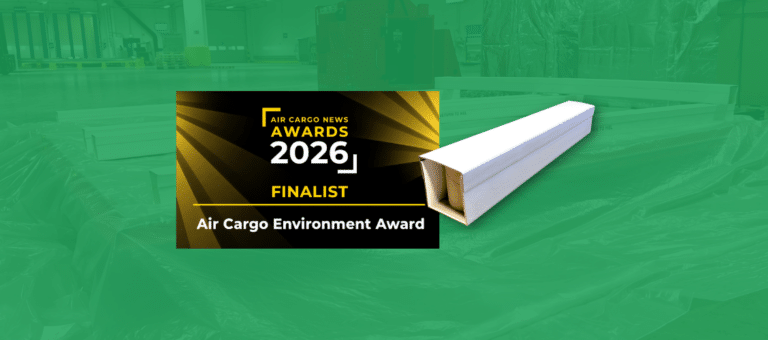
At the core of this solution is AirCargoRunners, our innovative carton-based system designed to reduce cargo weight and optimize load efficiency.
Why Reducing Weight in Air Cargo Matters
In air freight, every kilogram directly affects fuel consumption and CO₂ emissions. Even small reductions in operational weight can lead to meaningful savings per flight—and when scaled across operations, the impact becomes substantial.
Airlines today are under increasing pressure to:
- Reduce fuel usage
- Lower CO₂ emissions
- Improve operational efficiency without compromising capacity
AirCargoRunners addresses all three.

The Golden Insight: Small Change, Scalable Impact
Even a single unit per long-haul flight can reduce CO₂ emissions by 0.6 tonnes*.
This is where efficiency becomes powerful.
A small operational adjustment—replacing traditional components such as wooden beams or starting the optimization with AirCargoRunners—creates immediate benefits on a single flight and scales rapidly across daily and annual operations.
*This estimate is based on a typical long-haul flight from Helsinki, where a 100 kg weight reduction per unit, combined with route-specific emission factors, results in approximately 0.6 tonnes of CO₂ savings per flight.
Proven Impact: CO₂, Fuel, and Cost Savings
Adopted by Finnair Cargo, AirCargoRunners demonstrate how operational efficiency can translate directly into measurable environmental impact. Based on a long-haul flight scenario (approx. 14 hours), the measurable impact of AirCargoRunners is clear:
Scenario A: One 14-hour flight with 1 unit*
- 🌱 CO₂ reduction: 0.6 tonnes**
- ⛽ Fuel savings: 35 kg
Annual Impact =
- 🌱 219 tonnes CO₂ reduced annually
- ⛽ 12.775 tonnes fuel saved annually
- 💰 €13.413k annual fuel savings (Indicative. Fuel prices fluctuate.)
Scenario B: Scaled Operations (3 Flights per day, each using 1 unit)
- 🌱 657 tonnes CO₂ reduced annually
- ⛽ 38 325 tonnes fuel saved annually
- 💰 €40.239k annual fuel savings (indicative
*1 unit = PMC consisting of six AirCargoRunners.
** This estimate is based on a typical long-haul flight from Helsinki, where a 100 kg weight reduction per unit, combined with route-specific emission factors, results in approximately 0.6 tonnes of CO₂ savings per flight.
Contributing to Finnair Cargo’s Sustainability Goals
As a leading Nordic airline, Finnair Cargo continues to focus on reducing emissions and improving efficiency across its operations.
The use of AirCargoRunners contributes to:
- Lower aircraft weight per flight
- Reduced fuel burn
- Decreased CO₂ emissions
- More efficient cargo utilization
Importantly, these improvements do not require major operational changes—making them both practical and scalable.
Compliance & Measurable Impact
AirCargoRunners are designed not only for operational efficiency, but also to support evolving regulatory and reporting requirements.
- PPWR compliant – aligned with upcoming EU Packaging and Packaging Waste Regulation requirements
- CO₂ impact can be calculated – enabling data-driven reporting and transparency
This enables airlines like Finnair Cargo to:
- Track emissions reductions per flight
- Support internal sustainability reporting
- Strengthen compliance with environmental regulations
Designed for Real-World Operations
While not all flights will implement changes simultaneously, even targeted deployment across selected routes delivers measurable results.
This makes AirCargoRunners a realistic solution for airlines seeking:
- Incremental improvements with immediate returns
- Scalable sustainability impact
- Data-driven operational optimization
Smarter Cargo. Measurable Results.
AirCargoRunners represent a shift toward more intelligent, efficient air cargo logistics—where small innovations unlock significant environmental and financial benefits.
As adoption increases, the impact grows:
- From 0.6 tonnes CO₂ per flight with 1 unit
- To hundreds of tonnes annually*
- To thousands of tonnes across scaled operations
*For example, using just one unit across three daily flights can result in approximately 657 tonnes of CO₂ savings per year.
With AirCargoRunners now in use at Finnair, this marks another step toward more efficient, measurable air cargo operations.